Shape Language As It Relates
To Emotion
By Neil Blevins
Created On: Apr 15th 2026
Updated On: Apr 15th 2026
Software: None
There are many ways with which you can stir a particular emotion in
a viewer with your art. A common one is color which we explored in the
tutorial Color
As It Relates To Emotion And Culture, but another way to connect
with a viewer's emotions is with the sorts of shapes you use,
frequently referred to as the shape language of a character,
environment or prop. This lesson will discuss a few tips on how shape
language connects with emotions.
Shapes / Emotion
While there are many exceptions to these rules, there are some large
scale generalities that can be said about the association certain
shapes have as they relate to emotion. It's important to
understand these are generalities, not hard and fast
rules. So try them out, but let your artistic instinct tell you if
they're working for your particular situation.
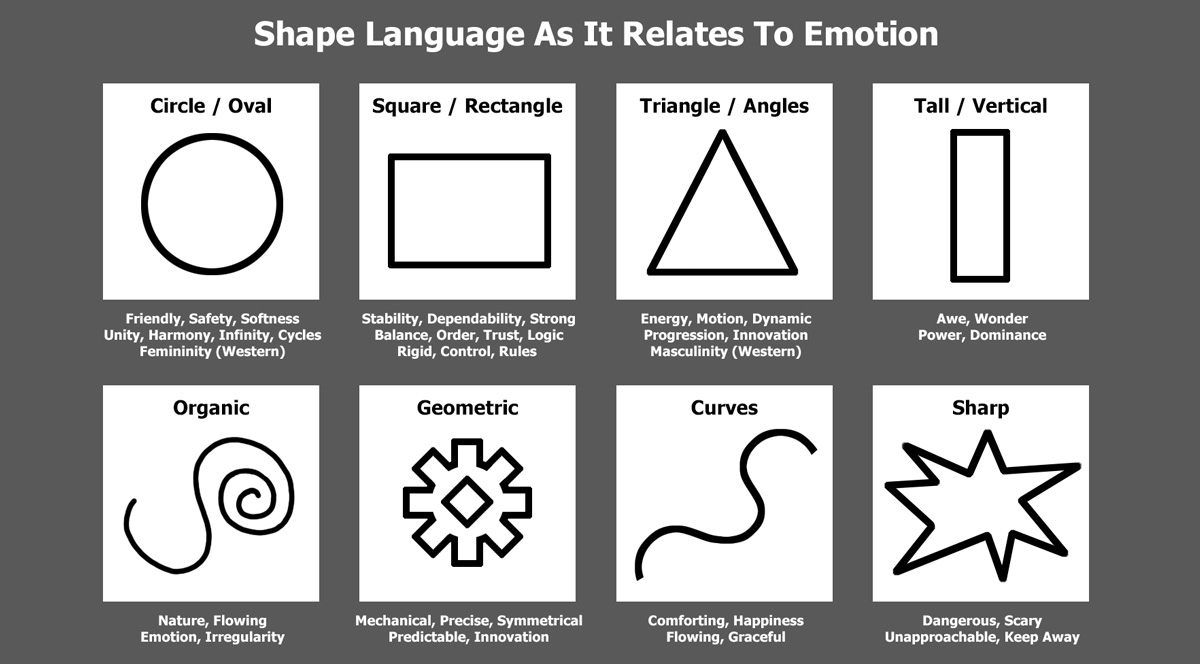
Now lets discuss
each in more detail...
Circle / Oval
Associated With:
- Friendly, Safety, Softness, Huggable, Friendly face in cartoons
- Unity, Harmony, Infinity, Cycles
- Femininity (Western)
If you have a character that you want to feel friendly, give it a
rounder face (this happens very frequently in animation). Circles and
Ovals are good for kid friendly items. In Western Culture, the shape is
often associated with femininity, especially the oval.
Square / Rectangles / Straight
Corners
Associated With:
- Stability, Dependability, Strong, Reliability
- Balance, Order, Trust, Logic, Security
- Rigid, Control, Rules
If you want to create a logo for a business like a bank, something more
square makes it feel like it's a powerful and trusted institution
that's been around forever. The downside is you can also use it to show
something that is rigid and controlling.
Triangle / Angles
Associated With:
- Energy, Motion, Dynamic
- Progression, Innovation
- Masculinity (Western)
Angles shapes often give a feeling of movement. If designing a
character in the west, giving them a more angular face (instead of
round) will tend to feel more masculin.
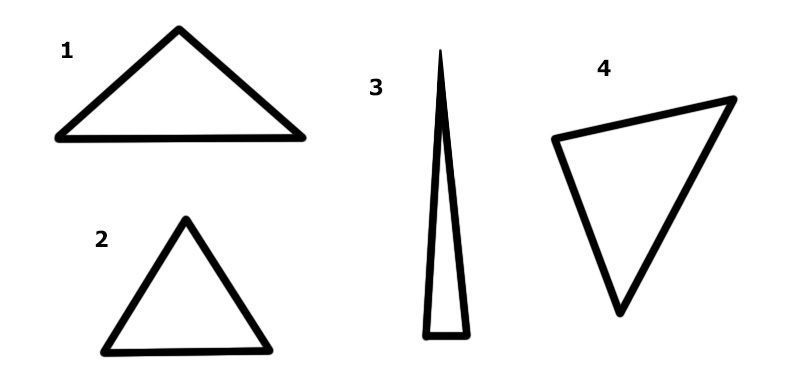
Triangles come in many different sub-types, and each type can evoke
their own set of feeling and emotions.
- If it has a wide / horizontal base, it feels very stable and ever
lasting (like a pyramid)
- If the edges are all the same length, feels regular which gives
the triangle more of the square properties (Balanced, order, etc)
- If it's thin, it feels more like a spike, which gives the
impression of danger
- if an irregular triangle, or upside down, gives the impression of
danger or off balance.
Tall / Vertical Shapes
Associated With:
- Awe, Wonder
- Power, Dominance, Authority
A tall shape can feel powerful and imposing, especially if you are low
looking up at it.
Organic Shapes
Associated With:
- Nature, Flowing
- Emotion, Irregularity
A shape that feels organic (like a flower, a tree, a big rock) can feel
comforting because people tend to respond positively to nature.
Geometric Shapes
Associated With:
- Mechanical, Precise, Symmetrical
- Predictable, Innovation
When we use geometric shapes (which have straight lines, precise
angles), we get that high tech feel, this has been manufactured, this
is processed. Can be a positive emotion, like innovation, the future!
Or negative, its sterile, too orderly.
Curves
Associated With:
- Comforting, Happiness
- Flowing, Graceful
Curves can make us feel happy due to their connection with nature. Also
associated with movement, we generally like seeing movement that
follows a curve as opposed to something more random / jerky.
Sharp
Associated With:
- Dangerous, Scary
- Unapproachable, Keep Away
Anything with sharp points will give the impression of danger. It's
telling you to stay away, like a porcupine.
Conclusion
Obviously there's so many different types of shapes out there, but most
shapes will fall into one of more or these 8 categories. Say you have a
character you need to design. Ask yourself what emotional response you
want from people when they see this character, then pick a shape that
falls into one or more of these categories that relates to what you're
trying to say. The same with environments, props, logos, products,
vehicles, etc.
And finally, for more info on shape language, check out some of my book
recommendations, especially the books from Molly Bang and Andrew
Loomis. And here's a great link to a Disney related document on the
subject: "The
Walt Disney Family Museum: Shape Language".
This site is ©2026 by Neil Blevins, All rights
are reserved.
To see hundreds of other tutorials similar to this one, visit the
Neil Blevins Education Site